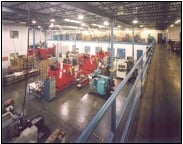
Safety should not be a goal but a requirement.

Many contractors will be eager to get construction projects waiting for the spring thaw off and running with the warmer temperatures approaching. It is very important to keep safety in the front of everybody’s minds.

Review your safety policies and talk with your employees and subcontractors about establishing a safe plan of action for every task they are to perform. Remind them to take into consideration the tasks that are happening around them. These are too often overlooked and can result in serious accidents. If you are elevated and working on a lift or ladder check for other traffic around you. It is good practice to set up some cones and caution tape around you to make yourself more visible to others. These extra steps only take a few minutes to perform and can be the difference between a good day at work or a trip to the ER.

As a business owner looking to find a good contractor with a proven safety record look no further than APPRO Development. It is our belief that “No Task Is More Important Than A Workers Health And Safety” and “If A Task Cannot Be Done Safely It Will Not Be Done”. It is these beliefs and the policies that we have put into place that keep our employees and subcontractors protected from accident and injury.

Winter Recreation in Lakeville

The City of Lakeville does a great job of organizing & posting up coming events. Listed below are some of the outdoor/indoor recreation schedules, maps and up coming events for the month of March.

Cross country ski and snowmobile trails

Lakeville Sno Trackers maintains the cross country ski trails in Ritter Farm Park and snowmobile trails throughout the City. Visit their website for current trail conditions.

For more information, contact Parks & Recreation at (952) 985-4608.

Ritter Farm Park map: Shows both cross country ski and snowmobile trails within the park

Snowmobile map: Shows current snowmobile trails throughout Lakeville

Lakeville Sno Trackers club information

Snowshoe rental

The City of Lakeville has snowshoes available for rent in three sizes:

  • Up to 150 lbs.
  • Up to 200 lbs.
  • Up to 275 lbs.

$3 per pair/per day
3-day minimum on weekends
$75 deposit required per pair

Pick up and return snowshoes at Lakeville City Hall, 20195 Holyoke Avenue, Monday through Friday, 8 a.m.-4:30 p.m.

Call Parks & Recreation at (952) 985-4600 to reserve snowshoes or for more information and availability.

Indoor Activities

Adaptive Art: Pottery- Saturday, March 05 2011, 9:30am – 11:00am

Stroke of Genius Pottery- Sunday, March 06 2011, 1:00pm – 4:00pm

Storytime Art- Monday, March 07 2011, 9:30am – 11:00am

Art Night Out: Handpainted Ceramic Wine & Dine Tray- Wednesday, March 16 2011, 6:30pm – 8:30pm

Adult Dance Class: Foxtrot, Waltz, Nightclub- Friday, March 18 2011

Mini Masters for Homeschooled Students- Friday, March 18 2011, 9:00am – 10:30am

Pottery for Homeschooled Students- Friday, March 18 2011, 10:45am – 12:15pm

Polymer Clay Jewelry- Saturday, March 19 2011, 9:00am – 12:00pm

Triathlon Swim Training- Sunday, March 20 2011, 2:00pm – 4:00pm

Lakeville Liquors Wine Academy: Wines of Argentina- Wednesday, March 23, 2011 7:00pm-9:00pm

Don’t Waste A Good Crisis!

local government innovation

Now that we finally have an official governor, it’s time to get down to business and address the looming $6 billion deficit, or some would term spending problem our state is facing. Our state revenues are projected to increase 5%, but our spending is projected to go up 23% if you take out the education payment shift. Certainly status quo is not an option. Our legislators need to prioritize their spending and look at delivering services differently. Now is the time for reform to lead our state and nation to the next level. Many feel that reform means more regulation, but I’d argue the exact opposite. We need to focus more on results—the bottom line, the goal. Let the people closest to the problem the freedom to figure it out. Give flexibility and incentives to do the job better. I am currently on a task force that is working on a “Guide to Innovation for Local Governments”. Here is the 5 step process that I think can be applied to anything:

1) Identify the problem (what is the goal?)

2) Determine the measurable outcome

3) Investigate why traditional methods are not working

4) Identify alternative theories or assumptions to address the problem

5) Innovate and redesign

Seems pretty simple, right? It would be if we weren’t creatures of habit and resistant to change. I encourage you to be the change you want yourself to be. Have the courage to look at things differently.

Our legislators do not have an easy job. Most of the items on the table you are not going to like and we will all be affected. However, this change is necessary. Let’s make this an opportunity to do things better by prioritizing government’s role and allowing creativity to innovate.

Thinking of remodeling!

It is very important as a Minnesota General Contractor to understand the impact a winter remodeling construction can have on an office remodeling project. Construction costs are usually lower during the winter months. This can save your companies construction project time and money during the winter construction.

There are many other ways to save cost on remodeling projects. These costs can include multiple bids in all construction categories such as electrical, HVAC, plumbing, drywall, painting, ect;. Remodeling doesn’t always have to be the office it can also include warehouse and production areas.

As a General Contractor for the last 20 plus years APPRO Development has remodeled many office, warehouse and production areas and passed along savings to the building owners. Call us today at APPRO Development if you plan to remodel, build or add on this winter.

It is never too early to start the planning process for your construction project.

Whether you are purchasing land to build a new facility or addition or improving your existing facilities there are many milestones that need to be met to successfully complete your project on time and on budget. The average land purchase and construction project can take between eight and twenty two months to complete and unless you have chosen a General Contractor that has extensive experience and expertise in the building process you will find yourself in an unorganized mess that leads to bad decision making and costly oversights.

At APPRO Development we take great pride in our ability to map out the entire construction process from initial client meetings and site searches to construction documents through post construction warranty. This key event schedule lays out when key decisions need to be made and milestones completed. It is this commitment to communication and attention to detail that allows us to deliver our projects “On Time, On Budget – No Surprises”. If this is the commitment you are looking for explore our website to see the full range of Architectural and Construction Management services we have to offer.

2010 Lakeville Manufacturers Appreciation Reception

Lakeville, Minnesota manufacturers – don’t forget to attend the Manufacturers Appreciation Reception hosted by the City of Lakeville on Tuesday, October 26th from 4:30 to 6:30 p.m. at the Holiday Inn & Suites. It’s a great opportunity to meet other members of the Lakeville manufacturing community.

You should have received your invitation in the mail last week. If you haven’t sent in your RSVP, please do so or contact Penny Brevig at the City of Lakeville – 952-985-4420 to confirm your attendance.

Contact APPRO Development for all your commercial, industrial, or manufacturing projects. As a design build general contractor, we can help with your new facility, remodel, or expansion plans.

Small Business Certainty is Key to Economic Recovery

I recently attended a real estate symposium with Dr. Mark Dotzour, the Chief Economist and Director of Research at Texas A & M College. Here are some of the basic points he discussed regarding the economy and commercial real estate:

The Good News

Corporate profits are up

Personal expenditures are up

Household debt is declining

General retail same store sales are up

A higher percentage of corporations plan to hire

Manufacturing new orders are up

Gross private domestic investment is up

Problem:

1) Small businesses are reluctant to hire due to uncertainty

2) Bank crisis has not been solved

3) We are in the biggest credit contraction since the depression

4) There is a lot of pent up demand from businesses and consumers that have postponed decisions and are sitting on cash.

History Lesson

“Hoover’s Maneuver”

Herbert Hoover raised taxes and tightened credit. It didn’t work well in the 30’s and if won’t work well now.

“Japanese Experience”

In 1989 the Japanese stock market and real estate bubble burst. They failed to recognize zombie loans. Twenty-One years later the Japanese stock market is 75% below peak and land values are 66% below peak.

Bad Case Scenario:

1) Congress demonizes business

2) Uncertainty of government regulation is killer to business activity

3) More government stimulus spending

4) Higher income taxes that reduces consumption and investment

5) Failure to resolve banking system causes the commercial real estate market to stay frozen

Solution:

1) The public sector needs to right size their budgets—public employees are part of the solution for cost cutting measures

2) Small businesses and investors need to get the “go signal” from Congress to grow jobs

3) The banking industry has to recognize the bad loans on their books

4) Diminish uncertainty

5) More investment in stocks

If banks won’t lend, the government will lend indirectly. Deflation is the serious concern. The amount of stimulus needed to get the economy out of depression is massive. Movements towards austerity led almost immediately back into recession.

We are all awaiting the results from the election November 2nd. Your vote matters so be sure to take the time to either absentee vote at your city hall or make it to the polls Tuesday 7:00 am – 8:00 pm.

Roz Peterson rozp@cerron.com 952-469-9444

Environmental Design relating to LEED – What is important to you as a Building Owner

The Minnesota chapter of the AIA has a good resource posted at their website for what an Owner might be asking their design professional when it comes to environmental design. What areas of concern as a building owner do you have? The link below to the pamphlet posted at their website is a good starting point:

http://www.aia-mn.org/_assets/pdf/ArchitectureEnvironment.pdf

APPRO can assist you with identifying areas within the building process that make sense of the various LEED points system and provide you with real cost analysis.

Small Business Jobs Act

The Small Business Act of 2010 has just been approved by Congress with many benefits to small business owners and individuals. We received the article shown below from our accountant KDV- this is a good recap.

It might be a good time to discuss the benefits of this progam with your accountant. I look forward to any other info someone has about the Act- please post or pass on.

Article from KDV- Small Business Jobs Act

Small Business Jobs Act benefits more than just small businesses

The Small Business Jobs Act of 2010 (SBJA) has just been passed by Congress, and it benefits more than

just small businesses. It also provides tax-saving opportunities for larger businesses and individuals —

including small-business investors, the self-employed and employees saving for retirement.

Changes affecting businesses

Section 179 expensing.

the Internal Revenue Code Sec. 179 expensing election limit. For tax years beginning in 2010 and 2011, the

limit will now be $500,000, with a dollar-for-dollar phaseout starting when purchases for the year exceed $2

million.

SBJA also temporarily expands the definition of eligible property to include qualified leasehold-improvement,

restaurant and retail-improvement property. The maximum amount of such property that can be expensed is

$250,000.

SBJA helps small-business owners invest in their own businesses by increasingBonus depreciation.

property, generally if acquired in calendar year 2010. Businesses can recover the costs of qualifying

depreciable property more quickly by immediately deducting 50% of the cost. Bonus depreciation isn’t

subject to any asset purchase limits, so businesses ineligible for Sec. 179 expensing can take advantage of

it.

Property that qualifies for bonus depreciation includes tangible property with a recovery period of 20 years

or less, computer software purchased by the business, water utility property, and qualified leasehold

improvement property.

Another depreciation-related provision extends the special allowance for certainOther key changes.

Here are some additional changes businesses should be aware of:

New five-year carryback of the general business credit,

Increase in the start-up expenditures deduction,

Shortening of the S corporation built-in gains period, and

requirements and special depreciation rules.

Removal of cell phones from the definition of “listed property” that’s subject to tighter substantiationChanges affecting individuals

Exclusion on small business stock gains.

SBJA temporarily increases the qualified small business (QSB) stock gain exclusion. The exclusion will be

100% for stock acquired after SBJA’s enactment date (that is, the date the president signs it into law) and

before Jan. 1, 2011, that’s held for at least five years. Additionally, the act eliminates the alternative

minimum tax (AMT) preference item on such gain, making it tax free for AMT purposes as well.

To make investing in certain small businesses more attractive,Self-employment tax.

purposes any costs incurred in 2010 for health insurance for you and your spouse, dependents and children

age 26 or under.

If you’re self-employed, SBJA permits you to deduct for 2010 self-employment taxRoth 457(b) plans.

may allow your employer to start providing you the option to designate some or all of your contributions as

Roth contributions. The contributions won’t reduce your taxable income, but you won’t have to pay any tax

on qualified distributions.

If you’re a government employee who participates in a 457(b) plan, be aware that SBJA401(k), 403(b) or 457(b) rollovers to Roth accounts.

allow (but isn’t

The amount of the rollover would be includible in your taxable gross income — except to the extent it’s the

return of any after-tax contributions. If the rollover is made in 2010, you can elect to pay the tax over a twoyear

period in 2011 and 2012.

Under SBJA, your 401(k), 403(b) or 457(b) plan mayrequired to allow) you to roll any portion of your pretax account balance into a Roth account.How you can benefit

Whether or not you’re a small-business owner, you may be able to reap significant tax savings by taking

advantage of the opportunities SBJA offers. We’d be pleased to help you determine exactly how you can

benefit.

I hope you find this information beneficial. For more great information about our commercial design build and general contractor services as well as all of your commercial real estate and property needs, please contact us today

New Stimulus Plan may assist in Commercial Real Estate and Construction Projects !

Small Business Stimulus Passes Congress

By MATTHEW G. LAMOREAUX and ALISTAIR M. NEVIUS SEPTEMBER 23, 2010

The House on Thursday passed the Small Business Jobs Act of 2010 (HR 5297) by a vote of 237–187, and sent it to the President, who is expected to sign the bill into law.

The bill, which passed the Senate last week, expands loan programs through the Small Business Administration (SBA), strengthens small business preference programs for federal government projects, provides incentives for exporters, offers a variety of small business tax breaks and includes some revenue raisers.

Small Business Loans

The bill creates a Small Business Lending Fund to address ongoing effects of the financial crisis on small businesses by allowing the Treasury Department to make capital investments in eligible financial institutions to increase credit available for small businesses. Independent community banks may participate in a new $30 billion lending fund on the condition they make loans to small businesses and meet other requirements. Financial institutions (bank and savings and loan holding companies, depository institutions, and community development loan funds) with $10 billion or less in total assets may apply for capital investments of up to 3% of risk-weighted assets.

Other small business lending provisions in the act include:

Online information center. The bill directs the SBA to create an online lending platform that lists all lenders that make SBA-guaranteed loans and provides interest rates for each lender.

Nonprofit lenders pilot. The bill also creates an intermediary lending pilot program to allow certain private, nonprofit entities that seek or have been awarded SBA loans to make loans to small businesses. The pilot will allow $20 million in loans each year from 2011 to 2013 to not more than 20 eligible entities. Eligible nonprofit organizations may apply for up to $1 million for the purpose of lending up to $200,000 to eligible small businesses.

Increased maximums for Microloan Program. The bill increases the Microloan Program maximum loan amount to $50,000 from $35,000. The bill raises total outstanding loan commitment limits to $4.5 million from $1.5 million and the total gross loan amount to $5 million from $2 million. Increased government guarantees and outstanding loan commitments are effective until Jan. 1, 2011, when the percentage guarantees will revert to the original percentages and the total outstanding loan commitment will reduce to $3.75 million.

Increased participation limit for Section 7(a) business loans. It also increases the limit on the government’s participation in so-called Section 7(a) small business loans to 90% from 75% or 85% for all Section 7(a) loans regardless of loan amount.

Raises loan maximums for plant acquisition, construction, conversion and expansion. The new maximums under the SBA’s 504 Program are tiered in relation to the borrower’s plans to use the capital to support federal government priority goals and projects, mostly in the energy and manufacturing sectors. For nonpriority goals and projects, the maximum is increased to $5 million from $1.5 million for each small business concern; to $5 million from $2 million for each small business concern if the loan proceeds will be directed toward certain public policy goals; to $5.5 million from $4, million for each project of a small manufacturer; to $5.5 million from $4 million for each project that reduces the borrower’s energy consumption by at least 10%; and to $5.5 million from $4 million for each project that generates renewable energy or renewable fuels, such as biodiesel or ethanol production.

Reduced fees for American Reinvestment and Recovery Act SBA loan guarantees. The reduced fees for SBA loan guarantees enacted by the American Reinvestment and Recovery Act of 2009 (ARRA) are extended to Dec. 31, 2010 (from Sept. 30).

Low-interest refinancing for Local Development Business Loan Program. Up to $7.5 billion in low-interest refinancing is available under the SBA’s Local Development Business Loan Program. Up to $7.5 billion annually is available for loan refinancing for two years after enactment for qualifying loans. Qualifying conditions include meeting job creation and retention goals and providing collateral valued at least 125% of the amount financed.

Retail floor plan refinancing. Creates a floor plan refinancing program, under which the SBA can guarantee open-ended extensions of credit to small businesses if the loan is used to purchase certain eligible retail goods for resale.

Express loan enhancement. The maximum amount of express loans under Section 7(a) of the Small Business Act is increased to $1 million from $350,000 for one year from the date of enactment.

Small Business Federal Contracting

Federal agencies are called on to solicit bids from small businesses and federal contracting requirements are amended to encourage small businesses to bid for federal contracts.

The bill also establishes a Small Businesses Teaming Pilot Program, which will promote federal contracting opportunities for joint ventures and small businesses. The program is scheduled to run for five years.

Federal agencies are required to solicit bids from any responsible source, including small business concerns, teams and joint ventures, for multiple award contracts above the substantial bundling threshold of the agency. The bill also revises the federal contracting and reporting requirements. Electronic annual certifications of small business size and status are required for ongoing eligibility as a small business contractor. Small business classification criteria must be reviewed by the SBA at least once every five years.

The bill requires the Comptroller General to study strategic mentoring alliances between large and small businesses as a way of getting small businesses access to federal contracts. The study will examine potential competition between mentor and protégé, systems to assure substantive benefit to the protégé, and agency processes to administer or monitor such programs. The study must be completed within 180 days of the bill’s enactment.

Small Business Exports

The bill contains measures designed to encourage small businesses to become exporters or to increase their export activities. The SBA will create a pilot three-year trade and export promotion program that will make grants to states to carry out export programs that assist eligible small businesses.

A number of changes are made within the SBA’s Office of International Trade to increase the number of small businesses that export and the volume of small business exports.

Other Small Business Programs

The bill creates federal grants for small business development centers to provide technical assistance to small businesses seeking capital and credit and other opportunities. It also mandates regulatory relief for small businesses.

A seven-year small business credit initiative is established to allocate federal funds (up to $1.5 billion) to participating states.

Small Business Tax Relief

Many provisions are targeted to assist small business operations through additional tax deductions and tax credits or exclusions. The bill would exclude from taxes certain capital gains on sales of small-business stock, and accelerate business tax write-offs for purchases of new equipment and other expenses.

Section 179 expensing and bonus depreciation. The bill increases the maximum amount a taxpayer may expense under IRC § 179 to $500,000 and increases the phaseout threshold amount to $2 million for tax years beginning in 2010 and 2011. The first-year 50% bonus depreciation available under IRC § 168(k) is extended for one year to apply to property acquired and placed in service in 2010 (or 2011 for certain long-lived and transportation property). The bill also allows taxpayers using the percentage-of-completion method to take into account the cost of qualified property as if bonus depreciation had not been enacted.

Qualified small business stock. The bill amends IRC § 1202 to increase the exclusion from gross income of gain from the sale or exchange of qualified small business stock from 50% to 100%, and the minimum tax preference does not apply. This provision applies to eligible stock acquired after the date of enactment and before Jan. 1, 2011.

Business credits. The carryback period for eligible small business credits under IRC § 38 is extended from one to five years. The bill also allows taxpayers to use eligible small business credits to offset both regular and alternative minimum tax liability. Both provisions are effective for credits determined in tax years beginning after 2009.

Built-in gains tax. For tax years beginning in 2011, the bill provides that for purposes of computing the section 1374 built-in gains tax, the recognition period is the five-year period beginning with the first day of the first tax year for which the corporation was an S corporation.

Self-employed individuals’ health insurance. The bill allows self-employed individuals who deduct the cost of health insurance for themselves and their spouses, dependents, and children under 27 years old as of the end of the tax year to take the deduction into account in calculating net earnings from self-employment for purposes of SECA taxes. This provision applies to the taxpayer’s tax years beginning after 2009.

Startup expenses. The bill increases the section 195 deduction for trade or business startup expenses from $5,000 to $10,000 for tax years beginning in 2010 and 2011. The start of the limitation on the deduction is increased from $50,000 to $60,000. So for 2010 and 2011 the amount of the deduction is the lesser of (1) the amount of the startup expenses or (2) $10,000, reduced (but not below zero) by the amount by which the startup expenditures exceed $60,000.

Reportable and listed transactions. The bill limits the section 6707A penalty for failure to disclose a reportable transaction (that is, a transaction determined by the IRS to have a potential for tax avoidance or evasion) to 75% of the decrease in tax resulting from the transaction. The maximum annual penalty allowed will be $10,000 in the case of a natural person and $50,000 for all other persons for failure to disclose a reportable transaction. For listed transactions, the maximum penalty will be $100,000 in the case of a natural person and $200,000 for all other persons. The minimum penalty is $5,000 for natural persons and $10,000 for all other persons.

The bill also requires the IRS to report to Congress by Dec. 31, 2010, and then annually, on penalties assessed for certain tax shelters and reportable transactions (under sections 6662A, 6700(a), 6707, 6707A and 6708). The penalty under section 6707A has been criticized because the penalty amounts often exceed the tax benefit of the targeted transactions. The IRS has since last July been working under a self-imposed moratorium on collection enforcement of the section 6707A penalty to give Congress time to amend the penalty amounts. The AICPA has recommended that the IRS be allowed to abate the section 6707A penalty in cases where the taxpayer has acted reasonably and in good faith. The AICPA also believes that judicial review should be allowed in cases where the IRS has assessed a penalty under section 6707A. The bill does not adopt either of these recommendations.

Cell phones. The bill removes cell phones from the definition of listed property. Thus, the heightened substantiation requirements and special depreciation rules that apply to listed property under IRC § 280A will no longer apply to cell phones. However, the Joint Committee on Taxation notes that this change “does not affect Treasury’s authority to determine the appropriate characterization of cell phones as a working condition fringe benefit under section 132(d) or that the personal use of such devices that are provided primarily for business purposes may constitute a de minimis fringe benefit, the value of which is so small as to make accounting for it administratively impracticable, under section 132(e).”

The AICPA recommended this statutory change in comments to the IRS in April 2008 and September 2009.

Revenue Raisers

The bill also contains several revenue-raising provisions.

Section 457 plan Roth contributions. The bill allows participants in government section 457 plans to treat elective deferrals as Roth contributions, effective for tax years beginning after 2010.

Rollovers to Roth accounts. The bill also allows rollovers from elective deferral plans to Roth-designated accounts. If a section 401(k) plan, section 403(b) plan or governmental section 457(b) plan has a qualified designated Roth contribution program, a distribution to an employee (or a surviving spouse) from an account under the plan that is not a designated Roth account is permitted to be rolled over into a designated Roth account under the plan for the individual. This provision is effective for distributions made after the date of enactment.

Annuitization. The bill permits a portion of an annuity, endowment or life insurance contract to be annuitized while the balance is not annuitized, provided that the annuitization period is for 10 years or more, or is for the lives of one or more individuals.

Reporting rental income. The bill makes recipients of rental income from real estate generally subject to the same information reporting requirements as taxpayers engaged in a trade or business. In particular, rental income recipients making payments of $600 or more to a service provider (such as a plumber, painter or accountant) in the course of earning rental income are required to provide an information return (typically Form 1099-MISC) to the IRS and to the service provider. This provision will apply to payments made after Dec. 31, 2010.

Information returns. The bill also increases the penalties for failure to file a correct information return. The first-tier penalty increases from $15 to $30, and the calendar-year maximum increases from $75,000 to $250,000. The second-tier penalty increases from $30 to $60, and the calendar-year maximum increases from $150,000 to $500,000. The third-tier penalty increases from $50 to $100, and the calendar-year maximum increases from $250,000 to $1,500,000. For small business filers, the calendar-year maximum increases from $25,000 to $75,000 for the first-tier penalty, from $50,000 to $200,000 for the second-tier penalty, and from $100,000 to $500,000 for the third-tier penalty. The minimum penalty for each failure due to intentional disregard increases from $100 to $250.

Federal contractor levies. The bill allows the IRS to issue levies prior to a collections due process hearing with respect to federal tax liabilities of federal contractors identified under the Federal Payment Levy Program, effective for levies issued after the date of enactment.

Cellulosic biofuels. The bill excludes so-called crude tall oil from the definition of cellulosic biofuel for purposes of the section 40 tax credit for alcohol used as fuel. Crude tall oil is a byproduct of the paper-making industry. Earlier this year, the Health Care and Education Reconciliation Act of 2010, PL 111-152, removed another paper byproduct—black liquor—from the definition of cellulosic biofuel.

Income from guarantees. This bill overrides the Tax Court’s recent decision in Container Corp., 134 TC no. 5 (2010), by amending the section 861 and 862 source rules to address income from guarantees issued after the date of enactment. Under new IRC § 861(a)(9), income from sources within the United States includes amounts received, whether directly or indirectly, from a noncorporate resident or a domestic corporation for the provision of a guarantee of indebtedness of the person or from any foreign person for the provision of a guarantee of any indebtedness of the person, if such amount is connected with income which is effectively connected (or treated as effectively connected) with the conduct of a trade or business in the United States.

Corporate estimated taxes. The bill increases the required corporate estimated tax payments factor for corporations with assets of at least $1 billion for payments due in July, August or September 2015.

— Matthew G. Lamoreaux (mlamoreaux@aicpa.org) is a JofA senior editor and Alistair M. Nevius (anevius@aicpa.org) is editor-in-chief of The Tax Adviser and a JofA contributing editor.